In Brief
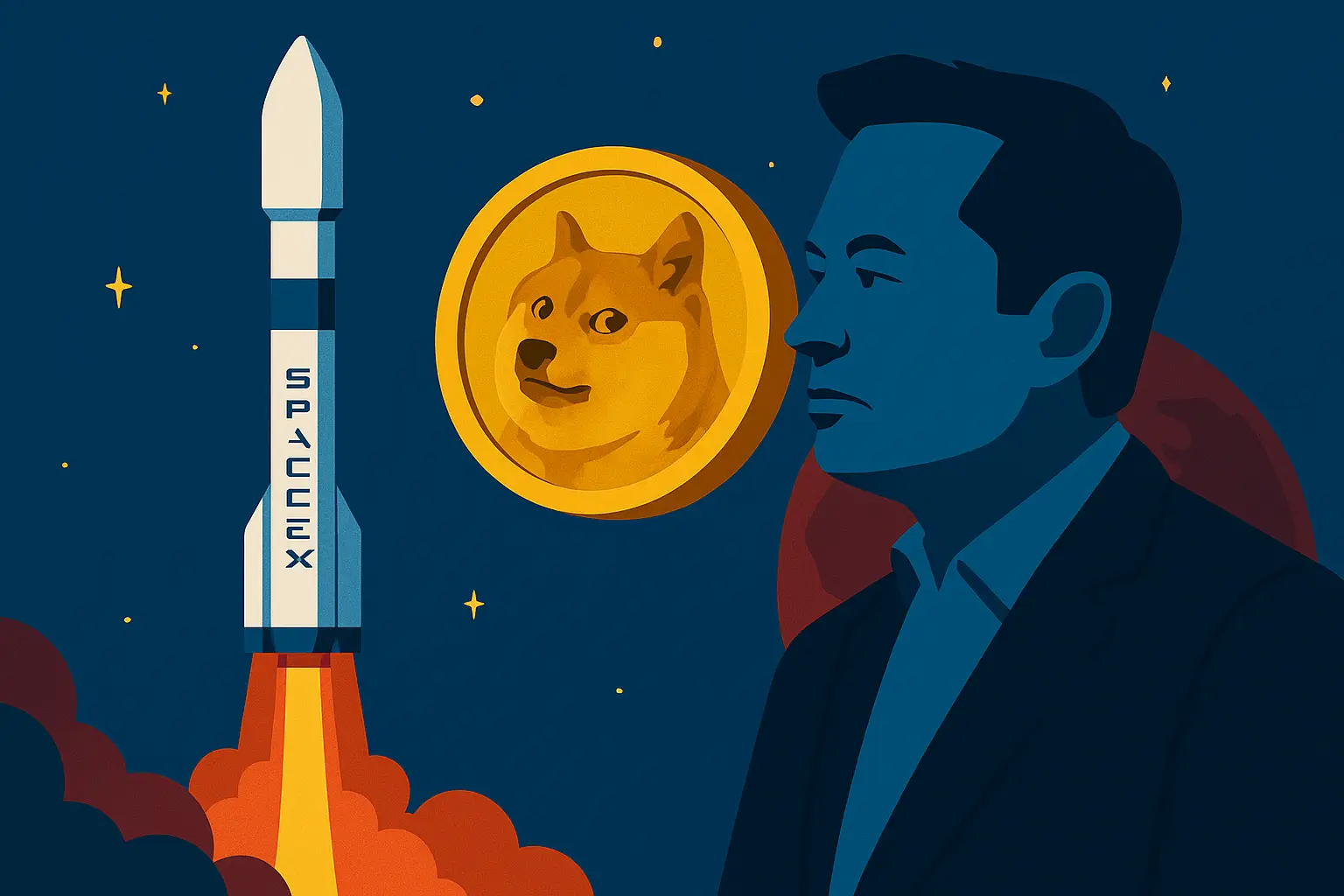
Elon Musk effectively confirmed SpaceX IPO plans by endorsing space journalist Eric Berger’s analysis stating “As usual, Eric is accurate,” signaling the end of SpaceX’s longstanding private status that enabled focus on long-term projects like Starship development and Mars exploration without quarterly earnings pressures.
Bloomberg reports indicate SpaceX targets approximately $1.5 trillion valuation through a public offering aimed at raising significantly more than $30 billion—surpassing Saudi Aramco’s $29.1 billion 2019 IPO as history’s largest—with listing timeline as early as mid-to-late 2026 though potentially slipping into 2027 depending on market conditions.
SpaceX’s current secondary offering prices shares at approximately $420, establishing an $800+ billion valuation driven by Starlink satellite internet revenue expected to reach $15 billion in 2025 and $22-24 billion in 2026, with IPO proceeds designated for space-based data center development and AI chip purchases.
Musk stated in podcast interview he would not participate in Department of Government Efficiency (DOGE) again, citing Tesla dealership vandalism and characterizing his government tenure as only “a little bit successful” despite DOGE website claims of $214 billion in cuts that independent observers dispute as falling short of actual savings.
Robinhood previously tokenized SpaceX shares for European users through its crypto app in June, allocating $500,000 in SpaceX tokens trading on Arbitrum as promotional giveaway, foreshadowing retail demand for access to SpaceX equity that traditional IPO would satisfy directly rather than through tokenized alternatives.
Elon Musk effectively confirmed that SpaceX will pursue a public offering in the near future while simultaneously ruling out any return to his controversial government efficiency role, delivering a dual signal about his strategic priorities following a turbulent political chapter. The confirmation came through Musk’s endorsement of space journalist Eric Berger’s analysis titled “Here’s why I think SpaceX is going public soon,” to which Musk replied on X: “As usual, Eric is accurate.” Given Berger’s reputation as the most reliable reporter covering SpaceX and his role as senior space editor at Ars Technica, the endorsement carries substantial weight beyond typical Musk social media commentary. Hours later, Musk told podcast interviewer Katie Miller—former DOGE spokeswoman and wife of Trump deputy chief of staff Stephen Miller—that he would not participate in DOGE again, citing Tesla vandalism incidents and modest success assessment. Understanding the significance of these simultaneous announcements requires examining why SpaceX historically maintained private status despite massive valuation growth, what Bloomberg reports reveal about the IPO’s unprecedented scale targeting $1.5 trillion valuation and $30+ billion raise, how Starlink revenue growth creates financial fundamentals supporting the offering, and whether Musk’s DOGE experience—characterized by claimed $214 billion cuts disputed by independent observers—influenced his decision to refocus on commercial ventures rather than government restructuring efforts.
SpaceX IPO Represents Historic Private-to-Public Transition
SpaceX has maintained private company status since its 2002 founding, a strategic choice that enabled management to pursue ambitious long-term projects—Starship development, Mars colonization infrastructure, Starlink satellite constellation deployment—without facing quarterly earnings pressures or short-term investor demands that could force premature revenue optimization or project abandonment.
However, Bloomberg reports indicate the company now targets a public offering with a valuation of approximately $1.5 trillion, seeking to raise significantly more than $30 billion. If executed at this scale, the offering would surpass Saudi Aramco’s $29.1 billion 2019 IPO as the largest in history. The targeted timeline places listing as early as mid-to-late 2026, though market conditions could push execution into 2027.
Here’s why I think SpaceX is going public soon.https://t.co/KEZIjhEsTH
— Eric Berger (@SciGuySpace) December 10, 2025
The valuation represents extraordinary appreciation from SpaceX’s origins. The company initially struggled to achieve reliable orbital launches, facing three consecutive launch failures between 2006-2008 that nearly bankrupted the venture before the fourth attempt succeeded. From those precarious beginnings, SpaceX has evolved into the dominant commercial space launch provider, capturing the majority of global commercial and government launch contracts while simultaneously deploying the world’s largest satellite internet constellation.
SpaceX’s current secondary offering—private market transactions where existing shareholders sell stakes to new investors—prices shares at approximately $420, establishing a valuation exceeding $800 billion. The secondary market pricing provides a floor for IPO valuation while demonstrating substantial investor demand at current levels. The gap between current $800+ billion secondary valuation and targeted $1.5 trillion IPO valuation suggests either: (a) aggressive growth expectations between now and listing date, (b) anticipation that public market multiples will exceed private market pricing, or (c) strategic positioning to create negotiation room if market conditions weaken.
Starlink Revenue Growth Provides Financial Foundation
The financial fundamentals supporting SpaceX’s unprecedented IPO valuation center on Starlink, the satellite internet service that has transitioned from experimental technology demonstration to substantial revenue generator.
SpaceX expects to generate approximately $15 billion in revenue during 2025, with the majority derived from Starlink subscriber fees rather than launch services. Revenue projections for 2026 range from $22-24 billion, representing 47-60% year-over-year growth. This growth trajectory reflects Starlink’s expanding subscriber base, geographic expansion into new markets, and potential enterprise/government contract additions beyond residential customers.
The Starlink business model provides characteristics attractive to public market investors: recurring subscription revenue creating predictable cash flows, network effects where constellation density improvements enhance service quality for all users, high marginal profit on additional subscribers once satellite infrastructure is deployed, and substantial barriers to entry preventing easy competition given the capital intensity and regulatory complexity of deploying competing satellite constellations.
However, Starlink’s capital requirements remain substantial. The service requires continuous satellite replacement as individual units reach end-of-life after approximately 5 years in orbit. SpaceX must maintain launch cadence deploying replacement and additional satellites to sustain service quality and enable geographic expansion. The company also faces evolving competitive threats from Amazon’s Project Kuiper and other satellite internet ventures, though SpaceX maintains significant first-mover advantages in constellation size, launch cost efficiency, and operational experience.
SpaceX plans to use IPO proceeds for space-based data center development and AI chip purchases to operate those data centers. This strategic direction reflects Musk’s broader AI infrastructure thesis: as computational demand for AI training and inference grows, space-based data centers could provide advantages including direct fiber-optic-free connectivity via satellite links, power availability from dedicated solar arrays, and thermal management benefits from the space environment. However, this application remains largely theoretical—no company has demonstrated commercially viable space-based data center operations at meaningful scale.
Tokenized SpaceX Shares Foreshadow Retail Demand
Prior to any IPO, alternative mechanisms for retail investor access to SpaceX equity have emerged through tokenization. In June, Robinhood offered tokenized SpaceX shares to European users through its EU crypto app, allocating $500,000 worth of SpaceX tokens as part of a promotional giveaway alongside $1 million in OpenAI tokens.
The tokens trade on Arbitrum, an Ethereum layer-2 network offering reduced transaction costs compared to Ethereum mainnet. This implementation demonstrates that technological infrastructure exists for fractional ownership and trading of private company equity through blockchain-based representations, though regulatory frameworks remain ambiguous in most jurisdictions.
The tokenization experiment reveals several market dynamics:
Pent-Up Retail Demand: Robinhood’s decision to feature SpaceX tokens prominently in promotional campaigns indicates the company’s assessment that SpaceX equity access represents a compelling incentive for user acquisition and engagement. This suggests substantial retail investor interest in SpaceX exposure that traditional private market structures don’t satisfy.
Regulatory Arbitrage: Offering tokenized shares through European crypto app rather than US-based securities platform reflects regulatory complexity. US securities laws strictly regulate who can invest in private companies and how those investments can be marketed. Crypto-based tokenization operates in regulatory gray areas where jurisdictional boundaries and applicable frameworks remain contested.
Liquidity Premium: Tokenized representations trading on blockchain networks provide liquidity that traditional private company shares lack. Shareholders can exit positions without requiring company approval or waiting for secondary offering windows. This liquidity commands premium pricing—tokenized shares often trade above private market valuations because instant tradability has value independent of underlying fundamentals.
A traditional IPO would satisfy retail demand that tokenization currently addresses, potentially reducing tokenized share premiums as investors gain direct access to SpaceX equity through regulated securities markets rather than requiring blockchain intermediation.
Musk’s DOGE Assessment: Modest Success and No Return Plans
In stark contrast to SpaceX’s forward momentum, Musk characterized his Department of Government Efficiency (DOGE) tenure as only “a little bit successful” and “somewhat successful”—notably modest assessments given the ambitious mandate to restructure federal government operations.
When asked by podcast host Katie Miller whether he would participate in DOGE again, Musk responded definitively:
No, I don’t think so. I think instead of doing DOGE, I would’ve basically worked on my companies, essentially. And they wouldn’t have been burning the cars.
The “burning the cars” reference alludes to vandalism incidents at Tesla dealerships and charging stations that occurred while Musk led DOGE. These incidents—whether politically motivated attacks or unrelated vandalism—created operational disruptions and security costs for Tesla while Musk’s attention focused on government restructuring rather than business operations.
Musk’s assessment that government work prevented him from focusing on his companies reveals opportunity cost calculation: the time and attention devoted to DOGE produced limited results (by his own characterization) while creating tangible costs including Tesla property damage and potential business opportunity losses from reduced CEO engagement.
The DOGE effort claimed to have identified $214 billion in cuts according to the initiative’s website. However, independent observers dispute these figures, noting that claimed “cuts” often represent: proposed reductions not yet implemented, accounting adjustments that don’t reduce actual spending, elimination of vacant positions that weren’t being filled regardless, or budget authority reductions that don’t translate to cash savings.
Musk described DOGE’s achievement as: “We stopped a lot of funding that really just made no sense, that was entirely wasteful.” This framing—stopping wasteful spending rather than comprehensive government restructuring—suggests more limited accomplishment than initial DOGE rhetoric promised.
The political dimension adds complexity. Musk “broke spectacularly with Trump in June” over the White House’s flagship tax and spending bill, which Musk called “utterly insane and destructive.” This public split with the administration he had been serving through DOGE effectively ended his government role and likely influenced his assessment that returning would be counterproductive.
Strategic Implications: Commercial Focus Over Political Engagement
The simultaneous SpaceX IPO confirmation and DOGE rejection signal Musk’s strategic repositioning toward commercial ventures and away from direct government engagement following what he evidently views as an unsuccessful political experiment.
SpaceX IPO as Priority: Taking SpaceX public represents a monumental transition requiring substantial CEO attention for: SEC filing preparation, roadshow presentations to institutional investors, media engagement explaining the investment thesis, and strategic positioning to maximize valuation. This workload is incompatible with divided attention between business and government roles.
Tesla Operational Focus: The vandalism incidents Musk cited—whether directly caused by his DOGE role or coincidental—created security and operational challenges requiring management attention. More broadly, Tesla faces intensifying competition in electric vehicles from both traditional automakers and Chinese manufacturers, requiring strategic focus that government work precluded.
xAI and AI Infrastructure: Musk’s AI ventures, particularly xAI and the Grok language model, demand significant capital and technical resources. The space-based data center plans mentioned for SpaceX IPO proceeds connect to broader AI infrastructure thesis spanning multiple Musk companies. Executing this vision requires coordination across SpaceX, xAI, and potentially Tesla (for AI hardware/software integration), necessitating CEO focus.
Political Capital Exhaustion: The public break with Trump and modest DOGE results suggest Musk’s political capital has diminished from its peak when he initially joined the administration. Attempting another government efficiency role without strong presidential backing and with skeptical media/bureaucratic reception would likely produce even more limited results than the first attempt.
Forward Outlook: IPO Execution Challenges and Market Conditions
While Musk’s endorsement of Berger’s IPO analysis confirms SpaceX’s intentions, successful execution at the targeted $1.5 trillion valuation and $30+ billion raise depends on numerous factors that could delay or alter the offering:
Market Conditions: Public market appetite for mega-IPOs fluctuates with broader economic and market conditions. If equity markets enter bearish phase, interest rates rise substantially, or macro conditions deteriorate between now and planned listing date, SpaceX may delay to wait for more favorable conditions. The Saudi Aramco precedent demonstrates this dynamic—the company initially planned its IPO years before 2019 execution but waited for optimal market windows.
Starlink Performance Verification: Institutional investors will scrutinize whether Starlink’s projected $22-24 billion 2026 revenue materializes. If subscriber growth slows, average revenue per user declines due to competitive pressure, or operational costs exceed projections, valuation expectations would adjust downward.
Regulatory Clearance: SpaceX operates in heavily regulated industries (aerospace, telecommunications, satellite operations) across multiple jurisdictions. The IPO requires coordination with SEC for securities compliance, FCC for communications regulation, FAA for launch operations oversight, and international regulatory bodies for global Starlink service. Delays in any regulatory approval could push timeline.
Competition Development: If Amazon’s Project Kuiper or other satellite internet competitors demonstrate meaningful service quality and customer traction before SpaceX IPO, it could reduce the “unique market position” premium that SpaceX valuation likely incorporates.
Musk’s Other Ventures: Musk’s simultaneous leadership of Tesla, SpaceX, xAI, Neuralink, and The Boring Company creates execution risk and attention allocation challenges. Public market investors in SpaceX would scrutinize how much CEO time the company actually receives versus competing priorities.
The 2026-2027 timeline provides SpaceX approximately 12-24 months to demonstrate Starlink revenue growth trajectory, advance Starship toward operational service, and prepare SEC filings establishing the investment case. Whether the company achieves the targeted $1.5 trillion valuation depends ultimately on whether public markets accept SpaceX’s positioning as both a mature space launch provider with predictable Starlink cash flows AND a growth company with transformational potential in Mars exploration and space-based infrastructure.
Missed buying crypto at the market bottom?
No worries, there's a chance to win in crypto casinos! Practice for free and win cryptocurrency in recommended casinos! Our website wheretospin.com offers not only the best casino reviews but also the opportunity to win big amounts in exciting games.
Join now and start your journey to financial freedom with WhereToSpin!
Middle East
wheretospininkuwait.com provides a comprehensive selection of trusted online casino reviews for the Middle East أفضل كازينو على الإنترنت. The platform features well-established casinos supporting crypto deposits in the region, including Dream Bet, Haz Casino, Emirbet, YYY Casino, and Casinia.
South Africa and New Zealand
In the South African online casino market, wheretospin.co.za highlights top-rated platforms and online casinos such as True Fortune Casino and DuckyLuck. Meanwhile, for New Zealand players, wheretospin.nz showcases highly recommended casinos, including Casinia, Rooster.bet, and Joo Casino.