In Brief
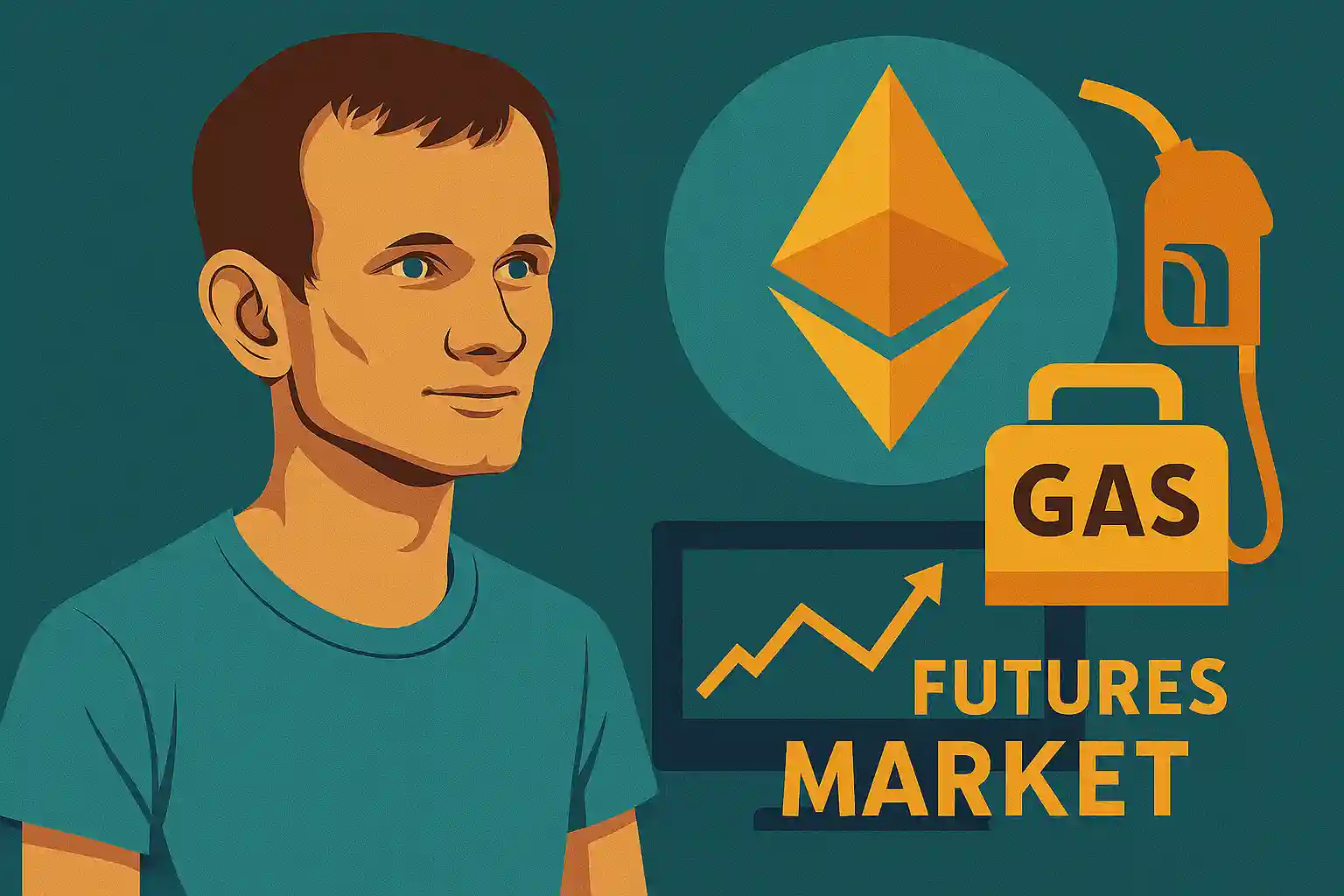
Vitalik Buterin proposed a trustless, on-chain prediction market for Ethereum gas prices on December 6, enabling users to lock in future transaction costs and hedge against volatility despite current gas prices sitting at multi-year lows of approximately 0.468 Gwei (roughly $0.03 per transaction).
The proposal aims to create market-based signals for future block space demand through trading exposure to Ethereum’s Base Fee, allowing developers and heavy users to prepay for specific gas quantities during defined time intervals regardless of spot price fluctuations.
Current low gas prices—driven by retail activity migration to Layer 2 networks like Base and Arbitrum—create what Buterin characterizes as “complacency” that leaves users vulnerable when network congestion inevitably returns and transaction costs spike dramatically.
Industry analysts suggest the mechanism addresses a structural gap in Ethereum’s infrastructure as the network transitions toward settlement layer positioning, arguing that gas exposure becomes a tradable financial asset requiring dedicated derivatives markets for risk management.
Critics warn that classic derivative structures face manipulation vulnerability because validators could produce empty blocks to influence futures contract outcomes, though delivered futures markets with liquid secondary venues could provide sufficient price discovery and hedging functionality while mitigating validator gaming risks.
Ethereum co-founder Vitalik Buterin proposed a trustless, on-chain prediction market for gas prices on December 6, designed to help network participants lock in future transaction costs and manage volatility exposure despite current gas prices trading at multi-year lows. The mechanism would enable participants to buy or sell commitments for specific gas quantities during future time windows, creating market-based signals for expected block space demand that currently don’t exist in Ethereum’s infrastructure. The proposal emerges at a paradoxical moment: Ethereum’s average gas price sits at approximately 0.468 Gwei (roughly $0.03 per transaction) according to Etherscan data, driven by retail activity migration to cheaper Layer 2 networks including Base and Arbitrum. Yet Buterin argues that current tranquility breeds dangerous complacency, leaving users vulnerable when network congestion inevitably returns and transaction costs spike orders of magnitude. Understanding the proposal’s significance requires examining why gas futures markets would provide value despite historically low current prices, how the mechanism would function technically within Ethereum’s architecture, what structural gaps it addresses as Ethereum transitions toward settlement layer positioning, and why validator manipulation concerns create implementation challenges that may require innovative contract designs beyond traditional derivatives structures.
Gas Futures Mechanism: Trading Base Fee Exposure Through Trustless Markets
Buterin’s proposal centers on creating a market-based mechanism for trading exposure to Ethereum’s Base Fee—the algorithmically determined minimum gas price required for transaction inclusion that adjusts block-by-block based on network utilization.
The structure would function as a prediction market where participants can take long or short positions on future Base Fee levels during specific time windows. Users expecting gas prices to rise could purchase gas commitments at current rates, effectively prepaying for future block space. Users expecting prices to remain low or decline could sell commitments, earning premium by assuming the risk of delivering gas at predetermined prices regardless of spot market conditions.
Buterin framed the value proposition clearly:
People would get a clear signal of people’s expectations of future gas fees, and would even be able to hedge against future gas prices, effectively prepaying for any specific quantity of gas in a specific time interval.
The mechanism provides three distinct benefits: price discovery through transparent market signals showing collective expectations about future network demand, hedging capability allowing users to cap maximum transaction costs regardless of spot price volatility, and planning certainty enabling developers and protocols to budget operational costs with confidence rather than facing unpredictable expense fluctuations.
The trustless, on-chain implementation proves critical. Unlike centralized futures markets requiring counterparty trust and settlement intermediaries, Buterin’s proposal envisions smart contracts automatically enforcing commitments and settling positions based on observed Base Fee outcomes. This eliminates counterparty default risk and makes hedging accessible to any Ethereum user without requiring centralized exchange accounts or institutional relationships.
Current Gas Price Tranquility Creates Complacency Risk
The proposal’s timing appears counterintuitive given that Ethereum gas prices currently trade at multi-year lows. Etherscan data shows average gas prices around 0.468 Gwei, translating to approximately $0.03 per transaction—a dramatic decline from historical peaks where complex transactions during network congestion periods cost hundreds of dollars.
This price collapse reflects fundamental changes in Ethereum’s usage patterns. Retail trading activity, NFT minting, and routine transactions have migrated overwhelmingly to Layer 2 networks including Base, Arbitrum, Optimism, and others that offer transaction costs measured in fractions of a cent. Ethereum’s Layer 1 increasingly functions as a settlement layer where L2s batch-post transaction proofs rather than hosting individual user activity.

However, Buterin argues that current low prices create dangerous complacency. Network participants grow accustomed to negligible transaction costs and fail to prepare for inevitable congestion events that cause gas prices to spike orders of magnitude within hours or days.
Historical precedent validates this concern. During the 2021 DeFi summer, gas prices routinely exceeded 500 Gwei, making simple token swaps cost $100-$300. During the May 2021 market crash, gas prices temporarily spiked above 1,000 Gwei as traders rushed to adjust positions simultaneously. More recently, NFT mints and memecoin launches have created short-lived congestion spikes where gas temporarily surged 10-50x above baseline levels.
Without gas futures markets, users face binary exposure: either accept whatever spot gas price the network demands at transaction time, or delay transactions and potentially miss time-sensitive opportunities. Developers building applications that require predictable transaction costs have no mechanism to hedge operational expenses. Protocols handling user transactions on their behalf face unpredictable subsidy costs that can balloon unexpectedly during congestion.
The complacency risk proves particularly acute because participants have short memories. New Ethereum users who joined during the current low-gas environment lack experiential knowledge of how dramatically costs can spike. Even experienced users grow complacent during extended quiet periods, failing to maintain hedging strategies or operational reserves sufficient to handle sudden cost increases.
Structural Gap: Gas as Financial Asset in Settlement Layer Architecture
Industry analysts supporting Buterin’s proposal argue that it addresses a fundamental structural gap as Ethereum transitions toward functioning primarily as a settlement layer for Layer 2 activity rather than hosting end-user transactions directly.
One analyst articulated this perspective:
If Ethereum is becoming the settlement layer for everything, then gas itself becomes a financial asset. So yeah a trustless gas futures market isn’t a “nice to have.” It feels like a natural evolution for a chain aiming for global-scale coordination.
This framing reveals a critical insight: as Ethereum’s role shifts, gas exposure transforms from an operational annoyance into a material financial risk requiring sophisticated hedging instruments.
Layer 2 Batch Posting Economics: L2 networks must regularly post batches of transactions to Ethereum’s Layer 1 for security finalization. These batch posts consume variable amounts of gas depending on batch size and data calldata requirements. L2 operators face continuous gas exposure—they must pay whatever the current Base Fee demands whenever they post batches. Without hedging mechanisms, L2 economics become unpredictably volatile: extended periods of high gas prices can make L2 operations unprofitable or force operators to pass costs to users through higher L2 fees.
Protocol Treasury Management: DeFi protocols, DAOs, and other on-chain organizations maintain treasuries and conduct regular on-chain operations including governance execution, yield distribution, and system parameter updates. These operations require gas. Organizations conducting regular on-chain activity face continuous gas price uncertainty that complicates budget planning and treasury management. A gas futures market would enable treasuries to allocate specific portions of holdings toward prepaid gas commitments, converting uncertain future expenses into known current costs.
Validator MEV and Priority Fees: While Base Fee burns, validators receive priority fees (tips) that users add to incentivize faster inclusion. Gas futures markets could extend to trading priority fee exposure, enabling participants to hedge against MEV extraction costs or lock in guaranteed inclusion timing during critical events.
The structural argument suggests that Ethereum’s maturation requires financial infrastructure matching traditional commodity markets: producers and consumers of block space need mechanisms to hedge price volatility just as airlines hedge jet fuel costs and manufacturers hedge raw material expenses.
Manipulation Concerns: Validator Power Over Block Production
Despite conceptual appeal, implementation faces significant technical challenges related to validator manipulation. An industry advisor at Titan Builder identified a critical vulnerability:
Classic derivative structures where contracts settle based on observed Base Fee outcomes face gaming risk because validators control block production. A validator holding short positions (betting that gas prices will remain low) could deliberately produce empty or partially-empty blocks, reducing network utilization and causing the Base Fee adjustment mechanism to decrease prices—directly benefiting their derivative positions.
The manipulation mechanics work as follows:
- Validator accumulates short positions in gas futures contracts betting on low future prices
- During the settlement window, validator proposes blocks with minimal transactions despite pending transactions in the mempool
- Artificially low block utilization triggers Base Fee decreases per EIP-1559 adjustment mechanism
- Futures contracts settle at lower Base Fee than would have occurred under normal block production
- Validator profits from derivative positions while simultaneously earning block rewards
The attack proves economically viable if derivative position profits exceed the opportunity cost of not including fee-paying transactions. During low-volatility periods when pending transactions pay minimal fees, validators sacrifice little revenue by producing empty blocks. However, their derivative positions could generate substantial profits if contracts have meaningful size.
The problem intensifies because validators operate on predictable schedules. Participants could identify which validators control block production during specific time windows and potentially collude with or bribe validators to manipulate outcomes during futures settlement periods.
Alternative Structures: Delivered Futures and Secondary Markets
The manipulation concern doesn’t invalidate gas futures concepts but suggests that implementation requires structures more sophisticated than simple price-settled contracts.
The Titan Builder advisor suggested that delivered futures markets with liquid secondary venues could provide sufficient price discovery and hedging functionality while mitigating validator gaming:
Delivered Futures Structure: Rather than cash-settling based on observed Base Fee, contracts could require physical delivery of prepaid gas credits. Buyers receive vouchers entitling them to specific gas quantities during future windows. Sellers must deliver actual block space or purchase it on spot markets to fulfill obligations. This structure eliminates direct Base Fee manipulation incentive because validators can’t profit by producing empty blocks—doing so merely reduces available block space for settlement without changing contract obligations.
Secondary Market Liquidity: A liquid secondary market for gas vouchers enables price discovery through voluntary trading rather than relying solely on observed Base Fee outcomes. Participants wanting to exit positions can sell vouchers to others rather than waiting for settlement. Market clearing prices in secondary venues reveal collective expectations about future gas costs without being directly vulnerable to validator manipulation of on-chain Base Fee.
Hybrid Mechanisms: Contracts could combine elements of both approaches—using secondary market prices for most settlement purposes but including delivery options that keep secondary prices anchored to genuine block space value. This creates arbitrage relationships where significant divergence between secondary prices and expected spot prices triggers delivery exercises that restore alignment.
Validator Participation Restrictions: Rules could prohibit active validators from participating in gas futures markets during their scheduled block production windows, or require disclosure of positions that creates accountability. While enforcement proves challenging in pseudonymous environments, validator selection for block proposal is deterministic and public, enabling some monitoring.
The implementation challenge suggests that Buterin’s proposal—while conceptually sound—requires careful mechanism design that accounts for Ethereum’s specific architectural characteristics including validator incentives, deterministic block production schedules, and Base Fee adjustment algorithms.
Market Design Considerations and Adoption Challenges
Even with manipulation-resistant structures, gas futures markets face adoption challenges that will determine whether they provide material value or remain niche instruments.
Liquidity Bootstrapping: Futures markets require two-sided liquidity—both buyers seeking hedges and sellers willing to take on gas price risk. During extended low-volatility periods, hedging demand may prove insufficient to attract meaningful market-maker participation. Without liquidity, bid-ask spreads widen to levels that make hedging economically unattractive, creating a chicken-egg problem where lack of liquidity prevents the adoption that would create liquidity.
Basis Risk and Contract Standardization: Effective hedging requires standardized contracts with clear settlement terms. Gas consumption varies dramatically across transaction types—simple transfers consume 21,000 gas while complex DeFi interactions can consume 500,000+ gas. Contracts must specify exact gas quantities and time windows. Participants with unusual usage patterns face basis risk where standardized contracts imperfectly match their actual exposure.
Counterparty Credit Risk in Delivered Structures: While trustless smart contracts eliminate default risk, delivered futures require sellers to possess or acquire gas to fulfill obligations. If gas prices spike dramatically above contract prices, sellers face potentially unlimited losses. Without proper collateralization and margin systems, some sellers may default, undermining market integrity.
Regulatory Classification: Depending on jurisdiction, gas futures contracts could face regulatory scrutiny as derivatives products potentially requiring licensing, disclosure, and compliance with financial regulations. This could limit institutional participation or force market structure changes that reduce efficiency.
User Experience Complexity: Retail Ethereum users generally lack sophistication with derivatives products. For gas futures to provide broad utility beyond institutional players, interfaces must abstract complexity while maintaining sufficient transparency for informed decision-making. Poor UX could limit adoption to sophisticated participants, reducing market depth.
Forward Outlook: Gradual Adoption Through Layer 2 Operator Demand
The most likely near-term adoption path involves Layer 2 operators, DeFi protocols, and institutional participants with predictable, ongoing gas exposure becoming early market participants. These entities have both operational need for gas hedging and technical sophistication to utilize derivatives products effectively.
As Layer 2 networks scale and batch-posting becomes more capital-intensive, L2 operators face increasing incentive to hedge gas exposure. A consortium of major L2s could potentially bootstrap gas futures markets by committing to participate as both buyers and sellers, creating the initial liquidity that attracts additional participants.
DeFi protocols conducting regular on-chain governance and operations represent another natural constituency. DAOs managing multimillion-dollar treasuries and executing complex on-chain operations monthly or weekly have clear incentive to lock in predictable gas costs rather than facing budget uncertainty.
Retail adoption would likely lag significantly and may never reach meaningful scale. Individual users conducting occasional transactions have insufficient exposure to justify derivatives hedging complexity. However, wallet providers or transaction aggregation services could potentially integrate gas hedging at infrastructure layers, enabling retail users to access benefits indirectly without directly interacting with futures markets.
The proposal’s ultimate success depends on whether Ethereum’s evolution toward settlement layer positioning creates sufficient systematic gas exposure that market participants actively demand hedging instruments. If L2 activity scales dramatically and gas price volatility returns, the value proposition becomes compelling. If Ethereum remains in extended low-volatility regime, hedging demand may prove insufficient to sustain liquid markets regardless of mechanism design sophistication.
Missed buying crypto at the market bottom?
No worries, there's a chance to win in crypto casinos! Practice for free and win cryptocurrency in recommended casinos! Our website wheretospin.com offers not only the best casino reviews but also the opportunity to win big amounts in exciting games.
Join now and start your journey to financial freedom with WhereToSpin!
Middle East
wheretospininkuwait.com provides a comprehensive selection of trusted online casino reviews for the Middle East أفضل كازينو على الإنترنت. The platform features well-established casinos supporting crypto deposits in the region, including Dream Bet, Haz Casino, Emirbet, YYY Casino, and Casinia.
South Africa and New Zealand
In the South African online casino market, wheretospin.co.za highlights top-rated platforms and online casinos such as True Fortune Casino and DuckyLuck. Meanwhile, for New Zealand players, wheretospin.nz showcases highly recommended casinos, including Casinia, Rooster.bet, and Joo Casino.